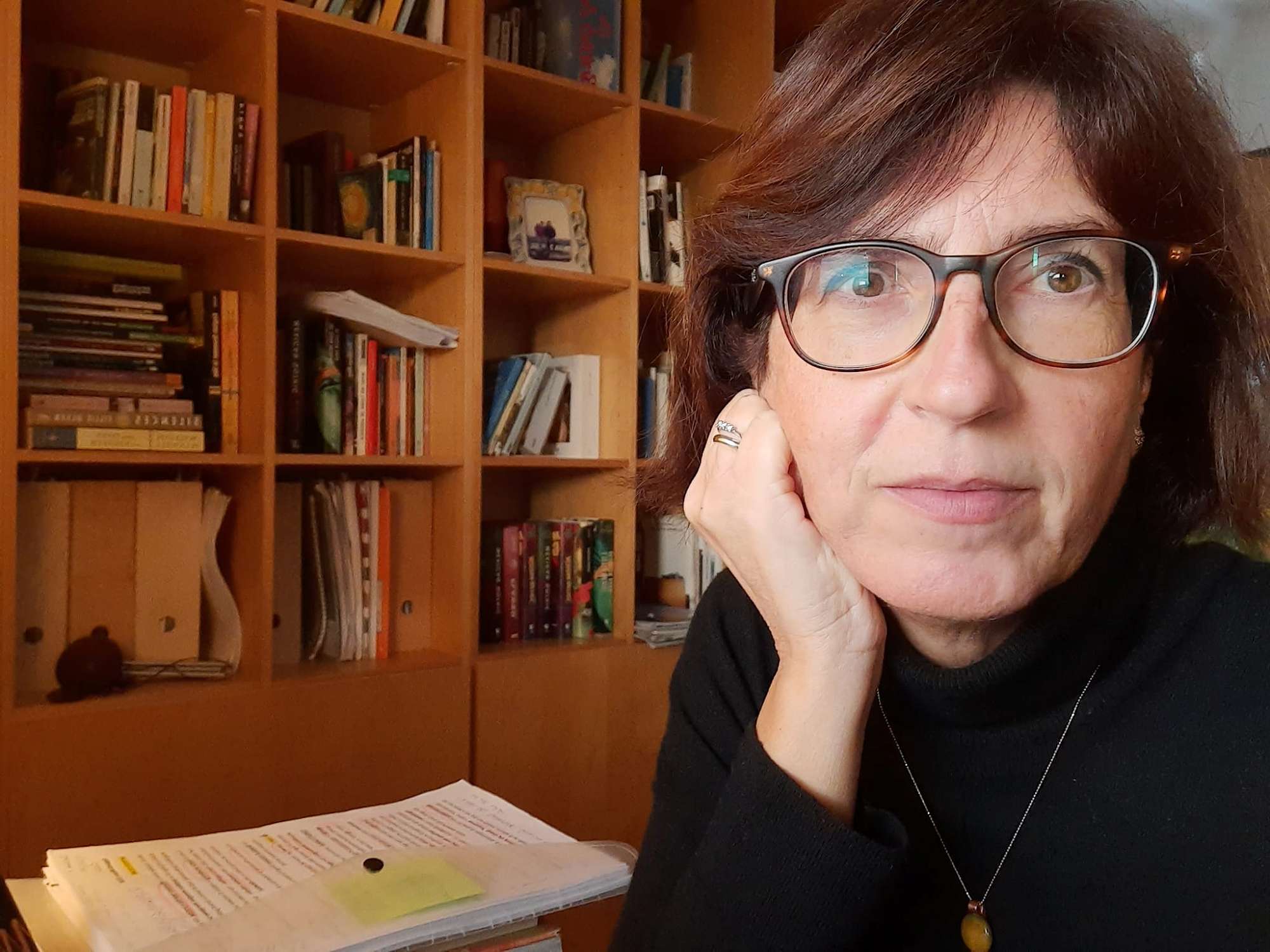

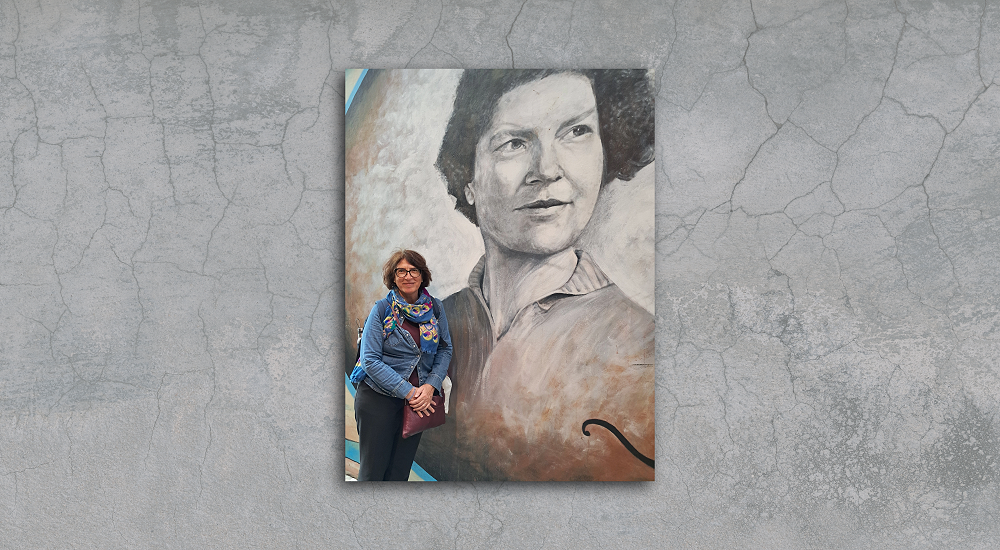
Giovanna Scocchera admiring the mural of Janet Frame in a lane off Dunedin's Octagon
Finding Janet
By Giovanna Scocchera - Ancona, Italy | Posted: Thursday Apr 23, 2026
I have been back home for over three weeks now, yet the bounty of riches I collected during my month in New Zealand—between Oturehua, Dunedin, and Oamaru— is still casting its reverberating light across my thoughts and emotions.
This journey, which I long imagined and quietly promised to myself nearly thirty years ago (following a love-at-first-sight fascination with New Zealand as portrayed in Jane Campion’s films), has carried me as far from Europe as one can be, but after a little adjusting, the geographical and cultural distance has proved beneficial in many ways. Fulfilment of a personal wish aside, the purpose was an immersive exploration—linguistic, visual, olfactory, and deeply intellectual—into the world of Janet Frame.
I have the honour of being entrusted by Mondadori—a major Italian publisher — with a revised edition of Frame’s most celebrated works, involving the editing of past translations and new translations as well: a project that seemed, from its very start, a serendipitous alignment of forces: a long-nurtured desire, a well-timed proposal, and a shared editorial vision.
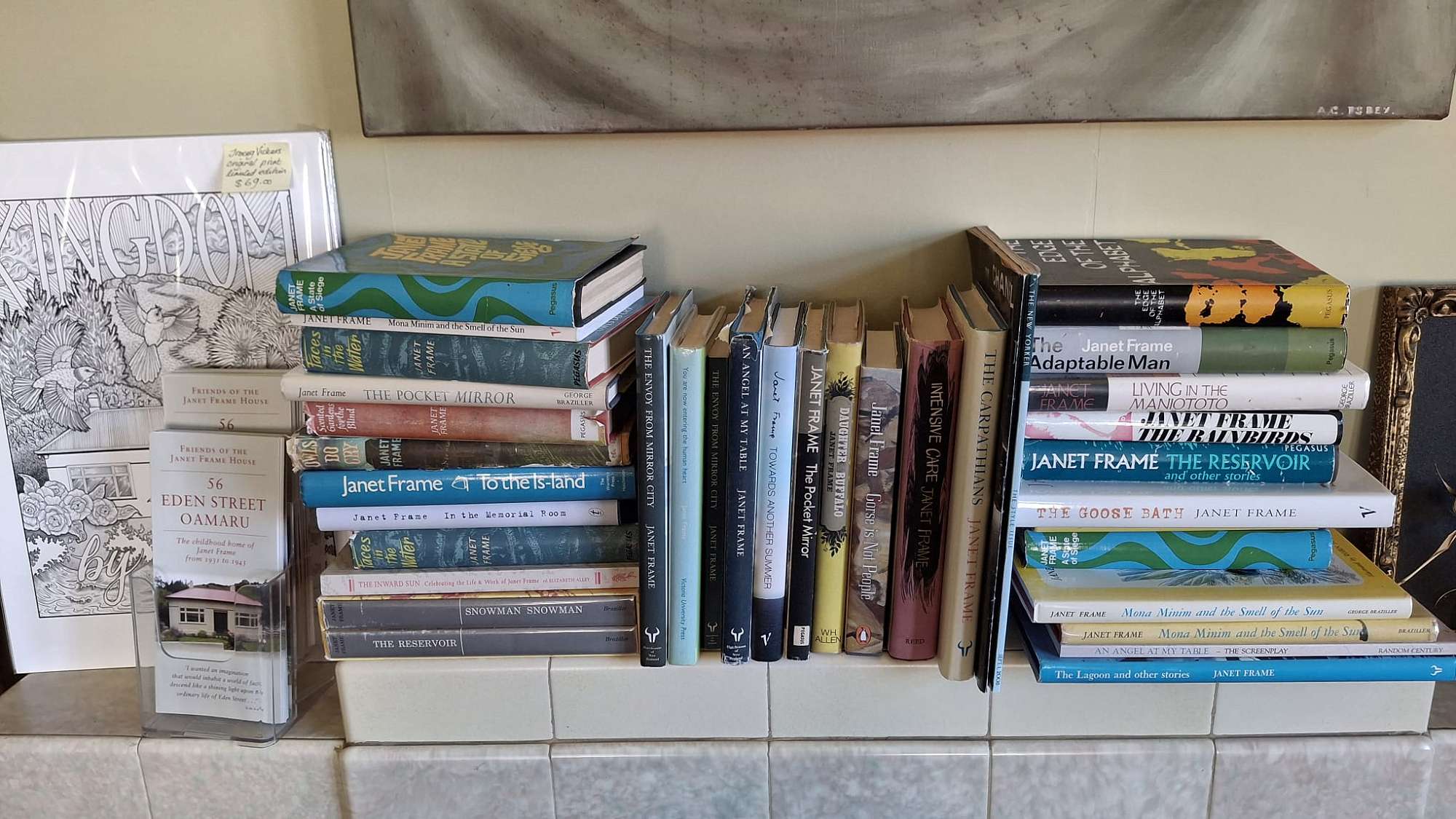
When I took this as a sign that I should find a way to spend some time studying and working in the orbit of Janet Frame, I could never have imagined how swiftly everything would fall into place. Within days, I had found not only a place to stay, but a community to belong to, thanks to the Under Rough Ridge Writers' Trust and the extraordinary generosity of Rose Riddell and Jenny Beck—perfect examples of New Zealand’s hospitality and dedicated promoters of the annual Mike Riddell Writer's Residency and Writer’s Retreat, where literature, language, and the enduring power of words come together to forge texts and dear friendships.
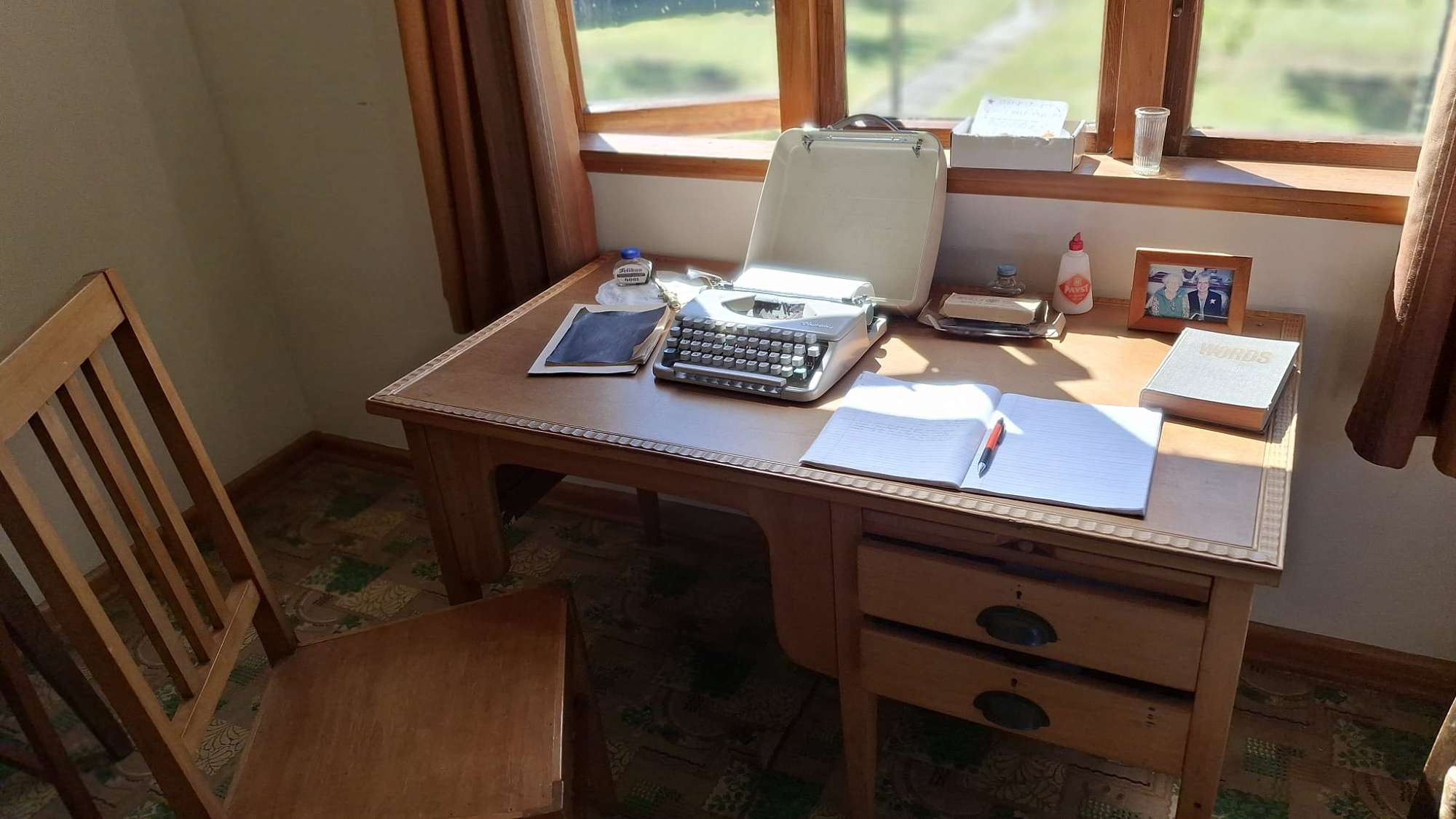
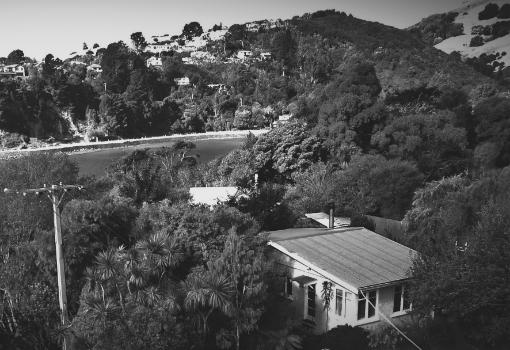
My base became a wee house in Oturehua, in the heart of Central Otago—or rather, “Up Central,” as Janet Frame herself would write. In using this expression, she evoked a childish imagery of people climbing ladders that reached into the clouds, and I must confess it felt exactly so. Surrounded by vast skies, rolling hills, deep silences, and ink-black starry nights, I often felt suspended somewhere between earth and heavens, as though I, too, were living on a cloud.
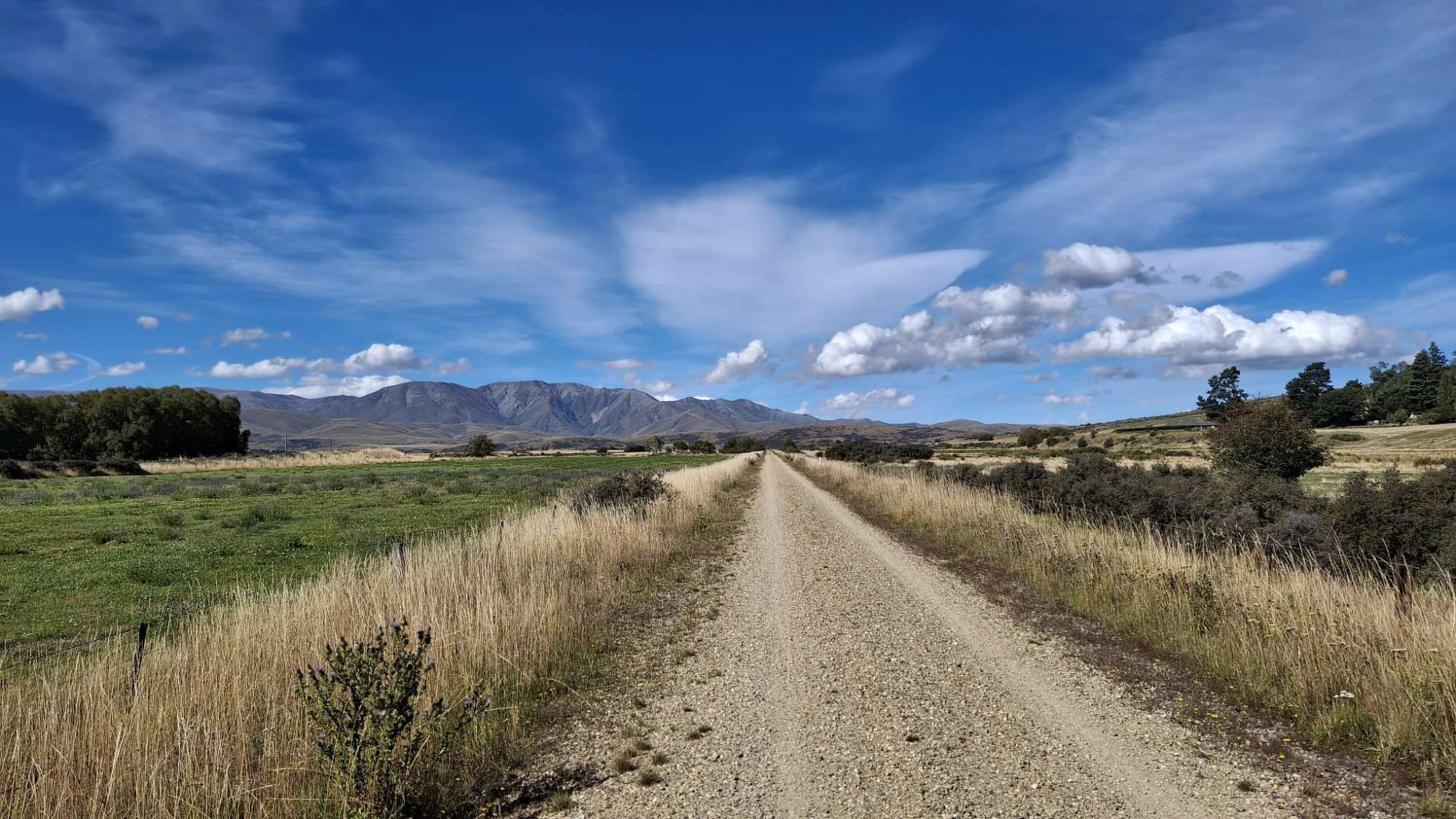
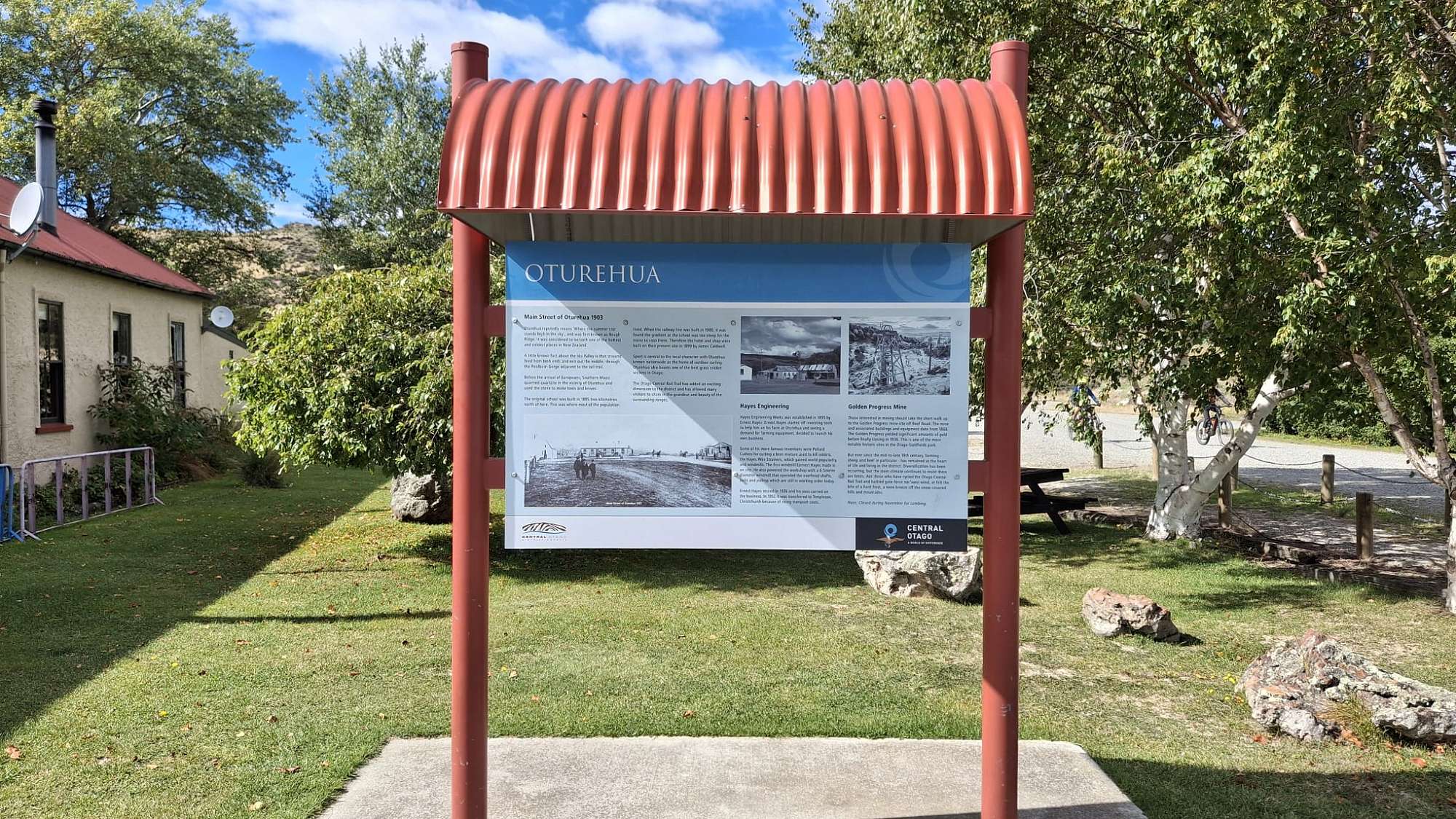
From the outset, I sensed that this experience—so distant from the rhythms of my everyday life of teaching, translating, editing, and routine—would be transformative in many ways. Oturehua warmly welcomed me in its community united by a shared love for books, culture, and beauty—a love made effortless in a place where beauty is aplenty, both natural and human. From there, my days have smoothly progressed with research, discovery, and encounters, especially in Dunedin and Oamaru—two places deeply woven into Janet Frame’s life and imagination.
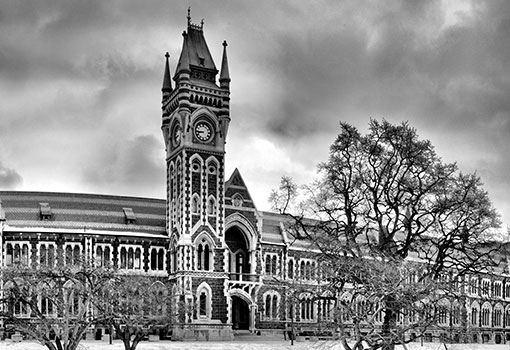
Dunedin revealed itself as a city where literature thrives in every corner. I spent long, book-worming days in its libraries—the City Library, the University Library, and the Hocken Collection—immersed in literary criticism, archival materials, letters, and documents that once belonged to Janet herself. Librarians welcomed me with a generosity that was both professional and caringly thoughtful; their curiosity and enthusiasm often transformed research into conversation, and conversation into connection.
In Dunedin, literature is not confined to the written page—it spills into life: book launches, poetry festivals, grants and awards nourish a vibrant cultural environment. Here, words still have the power to open doors—and hearts. I experienced this through meaningful encounters with Pamela Gordon, who shared memories both personal and literary, thus contributing to add new views of the multi-faceted, prismatic gem that Janet Frame was and still is, both as a writer and a human being; with Nicky Page, an insightful and passionate advocate for the literary scene; and even with a librarian who shared a moving memory of his:
“Janet Frame changed my life” he said. “When I read To the Is-Land after high school, I instantly knew I wanted to study English literature and live among books.”
Janet Frame spoke to me not only through her writing and those who cherish it, but through places themselves. I found her presence in the Octagon, in the plaque and mural dedicated to her, along George Street and Princes Street, at Seacliff, and in Oamaru—at Friendly Bay, in the city library, along Thames Street, in the Hall of Memories at Waitaki Boys’ High School, and most movingly, within the walls of her home, lovingly preserved and curated under the attentive care of volunteers.
I tried to gather everything—to absorb, document, and hold on to even the smallest details—so that my own words might remain loyal to hers: to her poetic voice, her imaginative vision, and her extraordinary ability to render both the natural world and the hidden depths of the human soul.
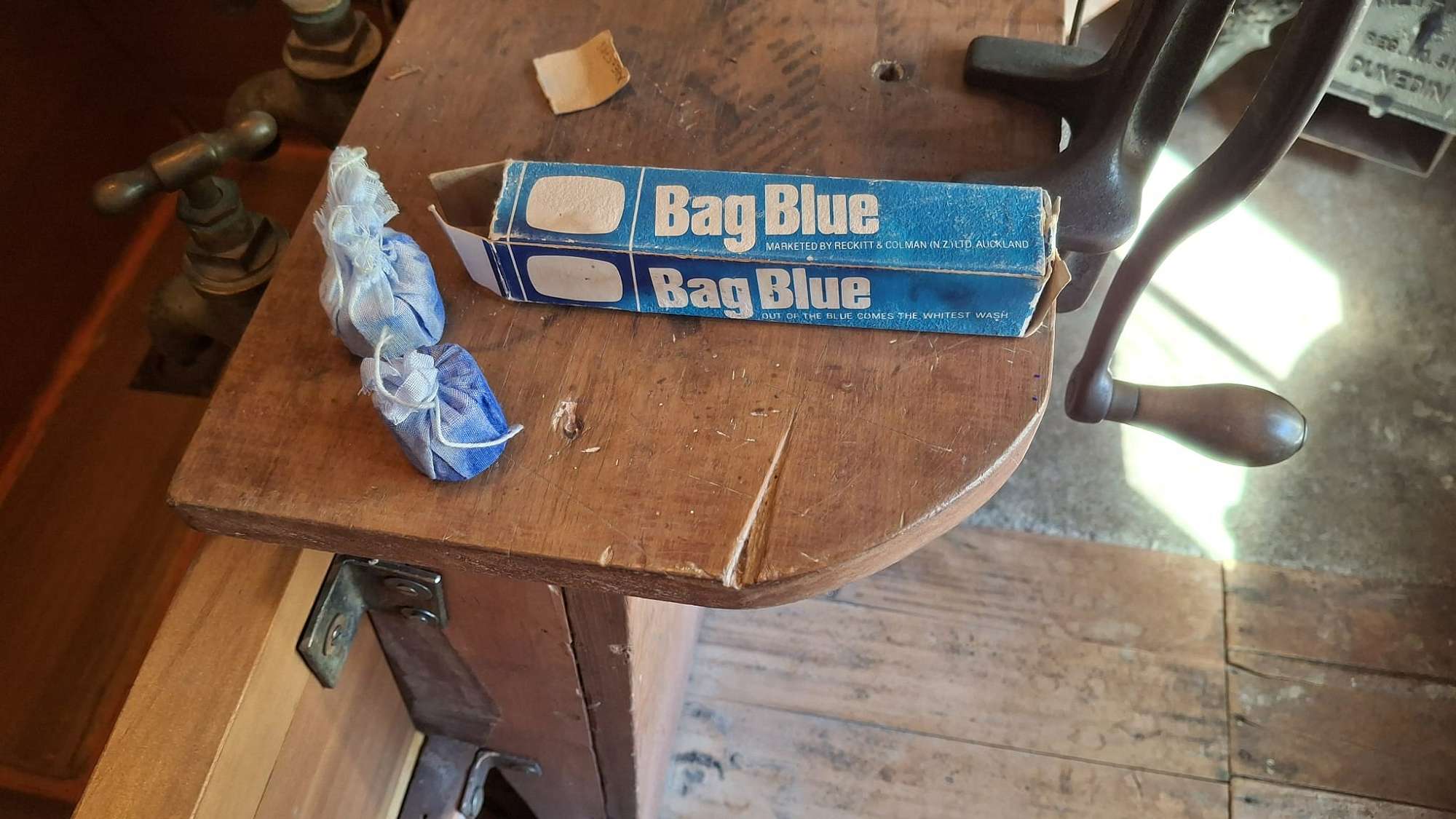
And yet, Janet Frame’s world revealed itself to me in ways I could never have anticipated: in solitary walks through landscapes dotted with abandoned mines, winding trails, and heritage sites, I felt reality and literature overlap. There, among tussocks, fantails, bag blue and railway red, it was as if fragments of her writing had stepped off the page and into the world to come and meet me.
I doubt I will ever fully express my gratitude for all that this journey has given me, but I would still like to try and share it, not only through Janet Frame’s words, but also through the wealth of New Zealand contemporary voices, both in adult and children literature, for whom I’d like to act as a sounding board in the near future.
What was set in motion over this extraordinary month is sustained by the friendships made, the memories I revisit, and the images I have chosen to keep close, so that a part of me, each day, may dwell where Janet herself found her place:
“In a cowslip’s bell I lie;
There I couch when owls do cry.”
Giovanna Scocchera has been translating and revising fiction and non-fiction from English into Italian since 2000 for leading Italian publishing houses. She has translated both adult and children’s literature, including works by Chuck Kinder, Mavis Gallant, Richard Mason, C.E. Morgan, Amanda Davis, Tillie Olsen, Janet Frame, Richard Matheson, Rose Tremain, R.F. Kuang; she has revised Italian translations of works by Martin Amis, Bret Easton Ellis, Mark Haddon, Paul Auster, Jonathan Franzen, Julian Barnes, Colm Tóibín. For her translation of The sport of kings, by C.E. Morgan, she was awarded the Nini Agosti Castellani prize in 2018. She has obtained a PhD in Translation, Interpreting and Intercultural Studies from the University of Bologna and has independently pursued academic research work in the field of literary translation revision, resulting in several publications on revision practice and didactics.